
St. Paul City Directory Holdings
Saint Paul Public Library keeps the core local run at George Latimer Central Library. The online set is especially useful for a quick name or year search, while the library formats matter when a desired volume is outside that online run. A St. Paul city directory was annual and editorial, not a census, so a result should be recorded with its year and page rather than treated as a complete resident roll. The library also notes that older volumes commonly emphasize the household head, and some people appear only under the conventions of their particular year.
| Collection | Years | Where Held | Access |
|---|---|---|---|
| Saint Paul city directories, digitized | 1856-1922 | SPPL Digital Collections | Search or browse online by year and page |
| Saint Paul city directories, microfiche | 1856-1859 | George Latimer Central Library | Library access |
| Saint Paul city directories, microfilm | 1863-1935 | George Latimer Central Library | Library access |
| Saint Paul city directories, print | 1938-present | George Latimer Central Library | In-library use; print copying is restricted |
The SPPL city-directory collection identifies the formats and explains their changing contents. Start with the version for the year needed, then use microfiche, microfilm, or print as the local fallback. The absence of a volume from the easiest online format does not mean the library lacks it.
St. Paul City Directory Formats by Year
The formats change the kind of question a researcher can answer. The earliest entries often give a street but not a house number. The 1866 volume arranged residents and businesses by ward, which can be more useful than forcing an early address into a modern search. By 1879, the street index added “to” and “from” information. More specific house numbers arrived in 1885, making an address-to-household comparison much stronger when the street name and numbering have survived.
Use the library's directory page as the format guide before choosing a volume. It documents the online collection and the local physical runs. A directory entry may also reflect a business connection, a household convention, or a street name that later changed, so preserve the spelling and wording visible in the source.
The image below comes from the Saint Paul Public Library city-directory collection, which documents the online and library holdings.
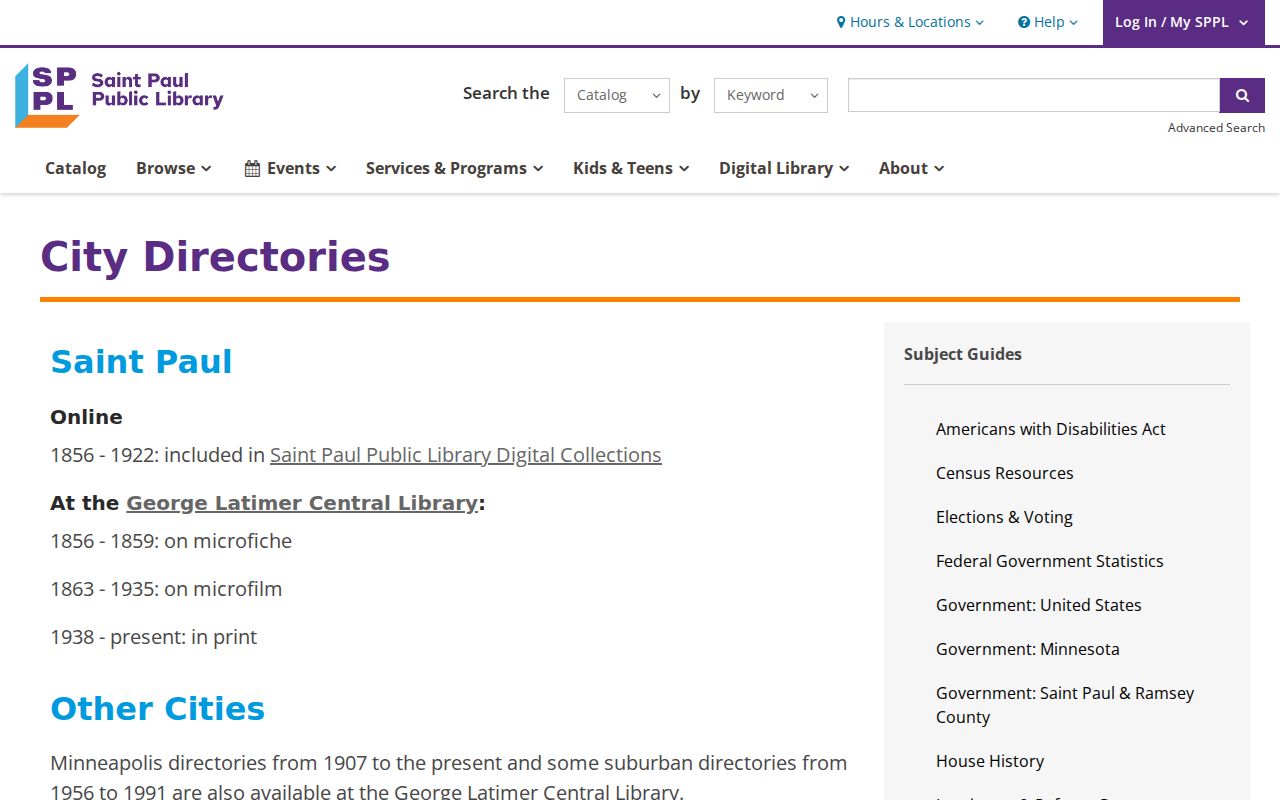
The collection view is a useful reminder that the same St. Paul directory question can require a digital page, reader, or printed volume depending on the year.
St. Paul City Directory Milestones
Directory features did not appear all at once. The annual volumes became more revealing as they added street tools, household conventions, and telephone signals. Reading the right year’s front matter is essential because a symbol or section can have a limited lifespan. A homeowner mark in one period is not evidence that the same mark existed in every St. Paul city directory.
- 1879: a street-name index supplied “to” and “from” information.
- 1885: house-number detail made address work more specific.
- 1929: a dotted circle marked homeowners, wives appeared after husbands, and the street index was printed on pink paper.
- 1933: all adults in the household were listed.
- 1940: a bell symbol indicated a telephone, without giving the number.
- 1961: telephone numbers entered the street index.
- 1964: a separate telephone-number section was added.
These shifts explain why a name can seem to appear or vanish. A later all-adult listing may reveal a person omitted under an earlier head-of-household convention. Note: A one-year gap can reflect editorial practice, a move, a name change, or a street change rather than a confirmed departure.
How St. Paul City Directory Entries Read
A St. Paul city directory entry should be read as a small period record. Alphabetical resident and business listings generally supply a name, street information, and an occupation or business type. Later volumes may add a house number, spouse convention, street-index finding aid, homeowner symbol, or telephone signal. The source’s own front matter is the safest key for abbreviations and symbols. The available library narrative confirms that conventions changed, but it does not reproduce a complete abbreviation key for every local run.
| Name | Alphabetical resident or business name, often with initials or a variant spelling. |
|---|---|
| Street and number | A street name in early volumes and, in later runs, a more specific house number. |
| Occupation or business | A period description that can distinguish people with the same name. |
| Household convention | Before later changes, listings tend toward the household head; wives and other adults appear under year-specific rules. |
| Year-specific symbol | The 1929 dotted circle marks a homeowner, while the 1940 bell indicates a telephone. |
- Criss-cross directory
- An address-ordered section that works from street and number toward an occupant or business for its publication year.
- Householder index
- An alphabetical arrangement centered on the listed household representative, not necessarily every person at the address.
- Abbreviation key
- The explanatory material in the same volume that should be checked before decoding marks such as residence, widow, or occupation shorthand.
Keep a page image or citation with the transcription. It preserves the original spelling and makes it possible to revisit a symbol when a different volume uses it differently.
St. Paul City Directory Research Desks
George Latimer Central Library is the local shelf for directories, the 1976 Street Directory, former street names, yearbooks, maps, historic-building material, and local clippings. For a broader cross-record search, the Minnesota Historical Society's Gale Family Library holds directories, newspapers, maps, photographs, local-government records, the 1895 state census index, and Digital Sanborn Maps. Ramsey County Historical Society adds building permits, photographs, maps, and local archival material. Each institution answers a different part of a household question.
The Gale Family Library is at 345 Kellogg Boulevard West in St. Paul. It is open Tuesday from 9 a.m. to 8 p.m. and Wednesday through Saturday from 9 a.m. to 4 p.m.; it is closed Monday and Sunday. Remote reference is also available by phone, mail, or email. That gives a researcher a library path when an online directory page needs to be checked against a census, map, newspaper, or archival record.
The Ramsey County Historical Society collections page describes its Landmark Center research resources and building-permit route.
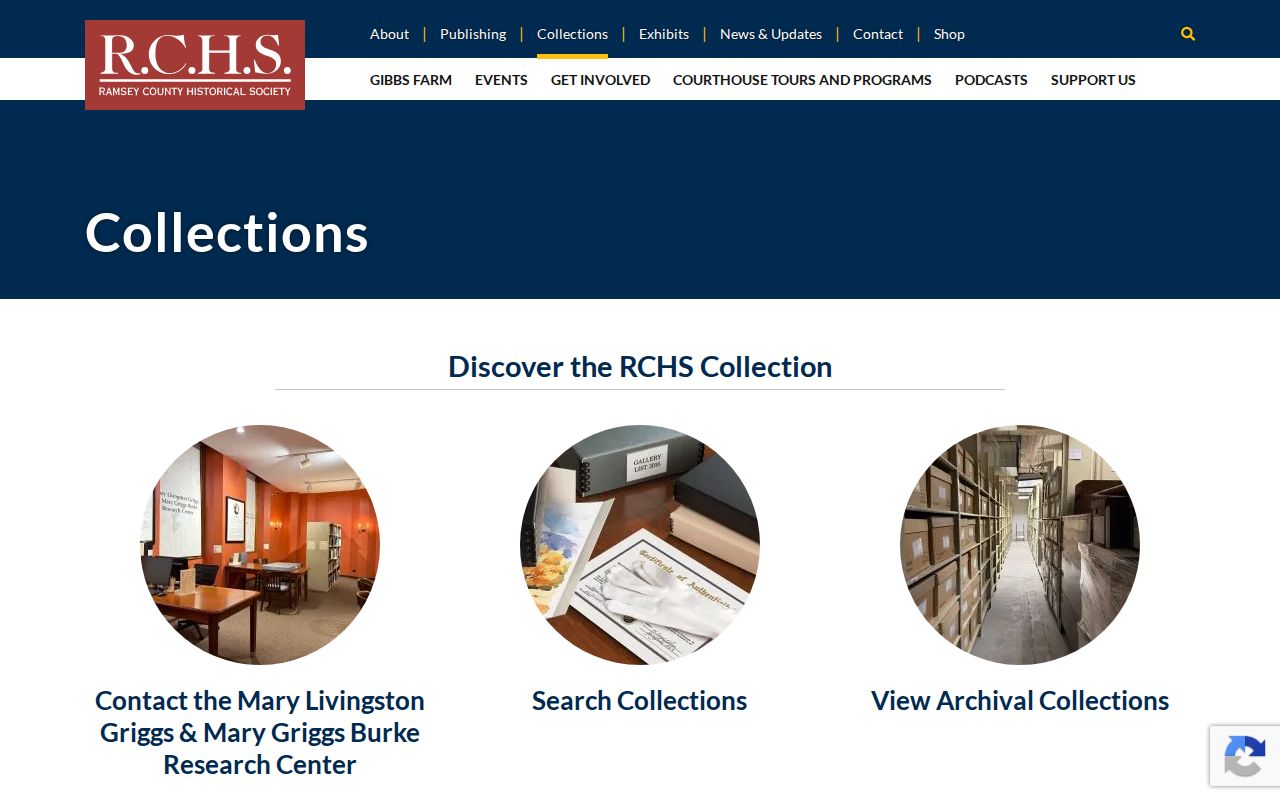
When a directory establishes a name at an address, a permit, map, photograph, or clipping can add local context without changing what the directory itself proves.
Bring a narrow question, such as one address, one surname, a likely period, and known spelling variants. Staff can help identify whether the needed item is online, microfilm, print, or restricted. The format determines both the access path and whether a reproducible page reference can be saved.
Tracing Families with St. Paul City Directories
Annual city directories work best when they are read in sequence. Begin with a known name or address, then move forward and backward one year at a time. The street index can lead to the alphabetical entry, which may add an occupation, household detail, or business connection. Pairing the directory with a decennial census keeps the two record types in their proper roles: the directory is often annual and address-specific, while the census is a household snapshot.
- Choose the earliest likely directory year with a usable address or ward reference.
- Locate the address in the street material, then check the alphabetical name entry.
- Record spelling, initials, street wording, household signals, occupation, and page.
- Search consecutive years and pair observations with the 1900, 1910, 1920, 1930, or 1940 federal census as appropriate.
- Test a change against a deed, permit, newspaper notice, obituary, probate record, marriage record, or naturalization file.
A disappearing entry is a research question, not a conclusion. It can reflect death, a move, remarriage, military service, a directory omission, or an address change. The separate St. Paul resident lookup route is useful only when the goal shifts from a historical household trail to verifying a current official record.
St. Paul City Directory Side Trails
Newspapers, naturalization files, parish material, and cemetery or probate records can test a directory trail. The MNHS Digital Newspaper Hub offers searchable St. Paul Pioneer Press and related titles from 1861 through 1961. SPPL also holds a Pioneer Press and Dispatch index for 1967 through 1996, while later newspaper access can depend on library or licensed access. Search a surname with an address, a street name, a neighborhood, or an obituary phrase rather than relying on the name alone.
The MNHS Digital Newspapers collection provides the historic local newspaper access described in the research.

Newspaper notices can date a move, death, organization, or address reference, but they remain a lead to compare with a directory, vital record, or court-held probate file.
Ramsey naturalization material supplies another side trail. The local collection has a personal-name index from 1849 through 1930 and contains declarations, final papers, petitions, and related records in several date ranges. Microfilm and restricted-original rules apply, so ask the holding institution about the available format before relying on a missing online image.
St. Paul Directory Geography and Names
St. Paul records can name the same place in more than one way. The city experienced 14 boundary changes from 1849 through 1887, and older material can use a town, village, addition, township, ward, or Saint Paul heading. Fort Street became Main Avenue in 1906 and later Main Street. In 2024, parts of Concordia Avenue and St. Anthony Street were restored to Rondo Avenue. Preserve the original place label before translating it to a modern map.
Rondo is a particularly important continuity example. The restoration followed decades in which freeway construction and the Concordia frontage-road name obscured part of a major African American neighborhood history. A city directory, map, or newspaper search should test both old and current street names. Note: Directory geography is strongest when the ward, addition, street spelling, and publication year are recorded together.