
Finding St. Paul Resident Records
Begin with the fact that needs checking. A current address points first to a Ramsey parcel record. A full name with a likely address can be tested through a person-specific election status search, then checked against court, vital, or recorded-document information when the question calls for it. A past household needs a different route: annual city directories, newspaper notices, and archival indexes carry more weight than a modern tax card. None of those sources proves every person who has lived at an address.
Keep the result and its date together. Ramsey records can preserve an old mailing address, a name variant, or a legal party that is not the present occupant. A second independent record helps separate a good match from a shared name. That habit is useful in a city with changing street names, historic additions, and records held by city, county, state, library, and court custodians.
- Use the strongest known name or street address first.
- For property, capture the PIN and legal description as well as the street address.
- Test a name in the appropriate official index, with spelling variants where available.
- Use historical directories and newspapers for an earlier household or former street name.
- Ask the custodian for inspection or copies when an online result is incomplete.
Note: A blank result can reflect a name variant, a nonpublic classification, an archive-only record, or an incomplete online index.
St. Paul Resident Records Offices
Ramsey County is the practical starting point for most local resident-record questions. The Recorder and Registrar of Titles holds recorded real-estate instruments. The county property system supplies parcel and tax context. Court Administration maintains the file behind a public case result. Elections, vital-records staff, and the State of Minnesota each hold narrower records with their own access rules. The county seat and state capital are both in Saint Paul, so several routes begin close to the address being researched.
Ramsey County Recorder
Recorded deeds, liens, plats, and title instruments.
651-266-2050
Ramsey County Property Records
PIN, situs, taxpayer, value, sales, and tax history.
651-266-2131
Ramsey Court Records
Plain, certified, and exemplified court-file copies.
651-266-8237
Office channels matter when an index alone is not enough. A deed image, an older court file, a certified product, or a public record that has not been posted may require a counter visit, phone request, mail request, or agency records request. The St. Paul street directory follows the address route in more detail.
St. Paul Parcels Start With PINs
Ramsey County's property and tax materials distinguish the physical situs address from the taxpayer mailing address. Search by property address, parcel number, or plat, block, and lot, then save the parcel identification number. The result can include taxpayer information, valuation, classification, structure description, sales, assessments, statements, and tax transaction history. The PIN is the stronger bridge between a street label, the map, a legal description, and a recorded instrument.
A homestead classification is a tax classification, not proof that a named person occupies the building today. A mailing address can point to another parcel, an organization, or a care-of contact. For title work, the legal description controls the research path. Those distinctions prevent a St. Paul resident search from turning a useful property clue into a claim the record does not support.
| Address | Physical parcel locator; older records may use a former street name. |
|---|---|
| PIN | County identifier that ties the parcel to tax and map records. |
| Situs | Property location, which can differ from a taxpayer mailing address. |
| Legal description | Lot, block, addition, or other title description used in deed research. |
The Ramsey County Property & Home search provides the property entry route and related tax, map, recorder, and survey resources.
The Ramsey County Property & Home page is shown in this source capture.
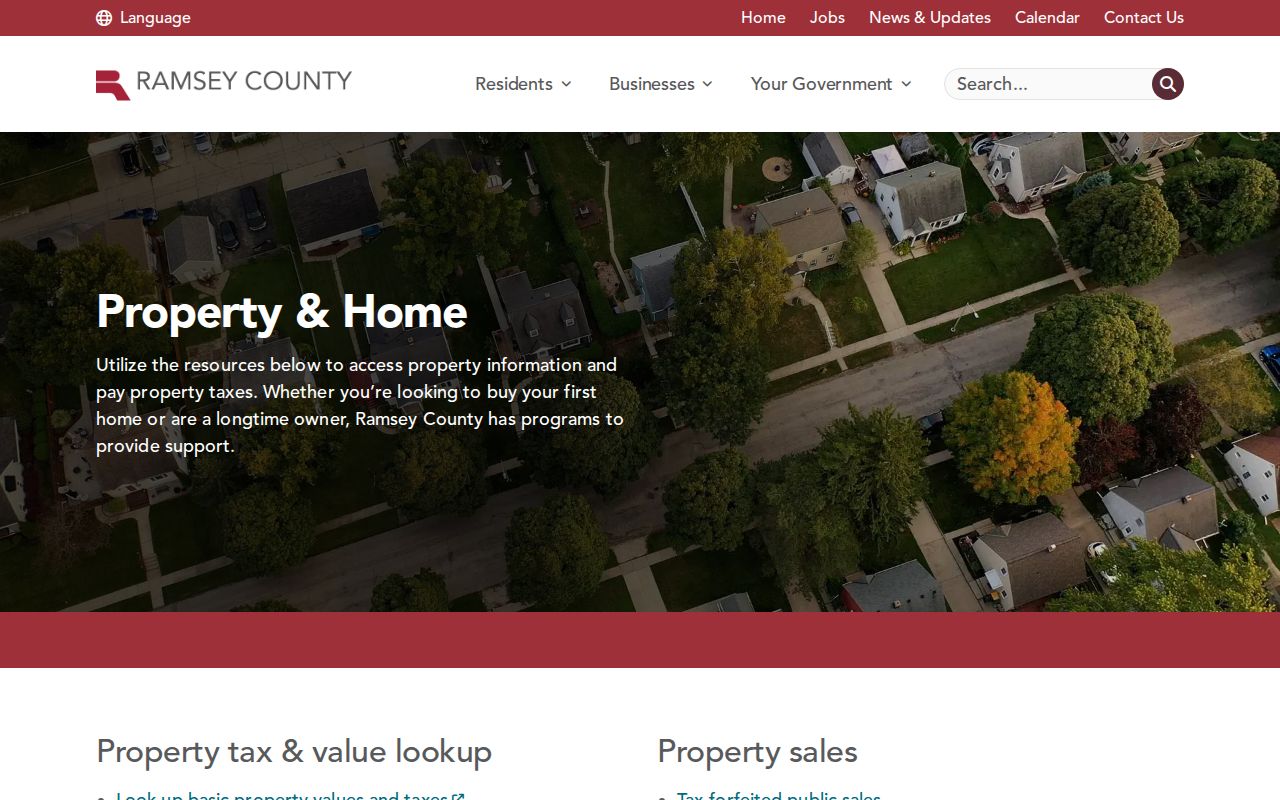
Use the entry point to reach the current parcel record, then keep property and mailing fields separate in later searches.
St. Paul Voter Status Checks
MNVotes is a status check for a specific registration, not a public roster for a street or ZIP. It requires first name, last name, birthday, and residence address. The form starts in ZIP or county mode, then asks for city or township, house number, street, and a unit when needed. The statewide system is updated nightly, but a nonmatch does not prove that a person has left Saint Paul or never lived there.
Minnesota Statutes section 201.091 treats a public information list differently from the status form. Its release has requester certification and permitted-use rules. Ballot choices are not part of an ordinary lookup. For a household question, use the voter channel only where the law and available identifiers fit the purpose.
The official MNVotes registration lookup presents the required address fields before a search.
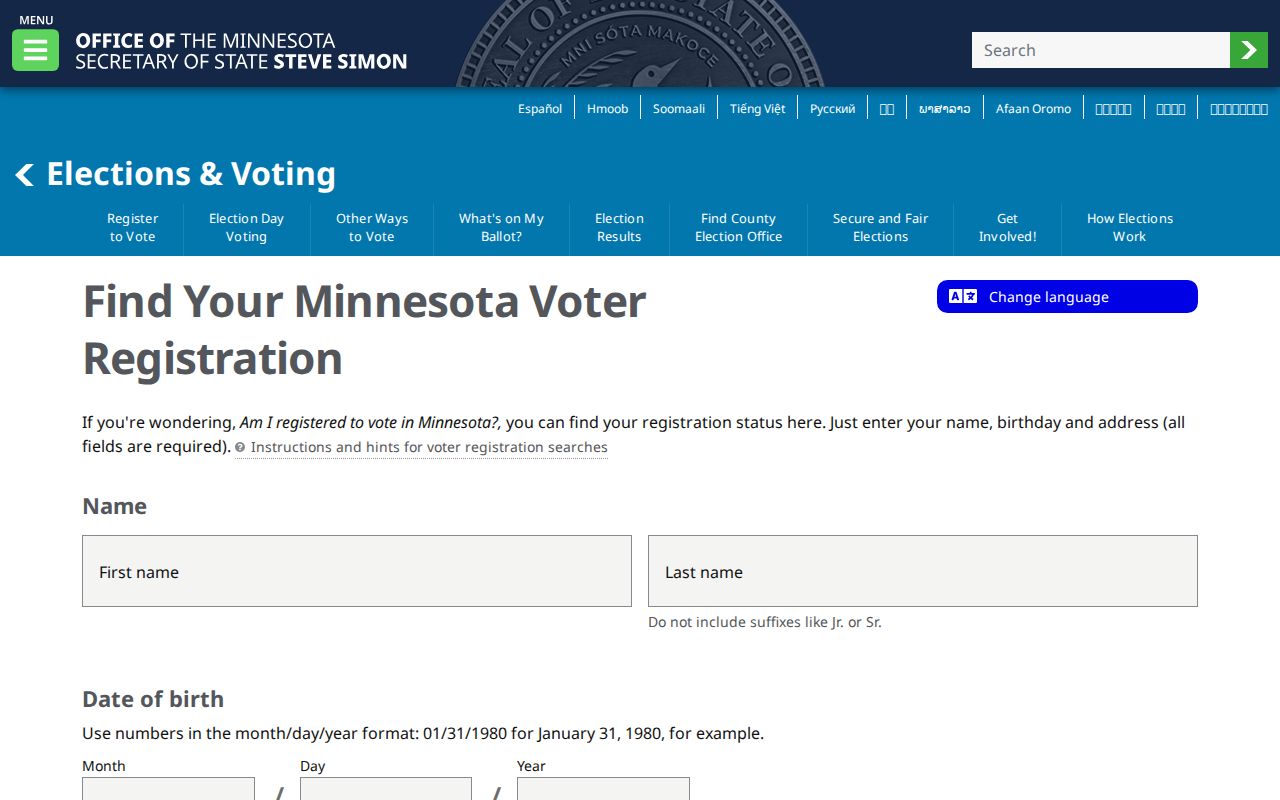
Its complete-input design is why an address and birth date should be checked carefully before treating a result as a match.
Note: Protected voters and Safe at Home participants may have special address handling that an ordinary search cannot reveal.
St. Paul Court Name Records
Minnesota Court Records Online, known as MCRO, is the public index for Ramsey County District Court and other Minnesota trial courts. Its name mode offers exact or Sounds Like searching, first, middle, and last-name fields, date-of-birth and filing-date ranges, case categories, status, and a county selector. Search with and without a middle initial, use a spelling variant, and narrow to Ramsey County when the result set is too broad.
A court result may show a case number, party role, filing date, status, register events, document index entries, and some public documents. It is not the official court record, cannot issue certified copies, and does not expose sealed, juvenile, or every pending criminal defendant-name result. Court Administration supplies the counter, phone, mail, and paid-copy path when an older or certified file is needed.
The public MCRO case search shows its name and case-search modes.
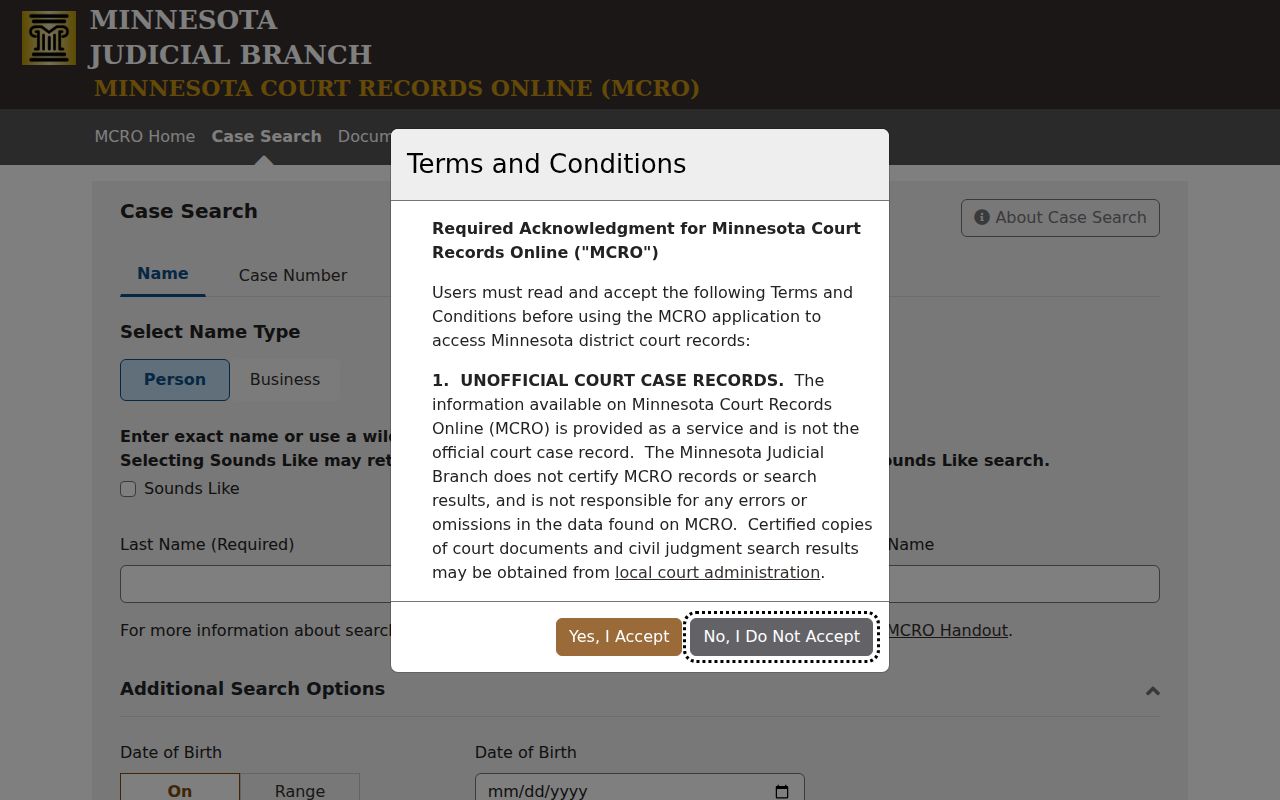
Compare the county, dates, case role, and another independent record before linking a docket name to a Saint Paul resident.
Current St. Paul Resident Sources
No current list captures all Saint Paul households. Each source records a defined relationship to a parcel, civic process, case, credential, or public filing. The table separates what a source can show from what it cannot establish. It also keeps a property owner, a registered voter, and a recorded-document party from being treated as interchangeable labels.
| Local source | Connection shown | Custodian | Access route |
|---|---|---|---|
| Property tax and value record | Taxpayer or owner, situs, PIN, value and tax history | Ramsey County | Public property search |
| Recorded land index | Grantor, grantee, document date, legal description | Recorder | RecordEASE or office |
| Registration status | Individual registration match and precinct path | Minnesota elections | MNVotes with required fields |
| Court index | Public party and case information | Judicial Branch | MCRO or court counter |
| Municipal property record | Permits, inspections, zoning, and property status | Saint Paul | PAULIE/Civic Access |
RecordEASE is the recorder's online land-record route. It charges a monthly account fee and separate search or document-view charges, and it identifies April 24, 2014 as the start of electronic recording. Earlier index books, office access, microfilm, and archives remain part of the chain. Record type, party role, and legal description are more useful than a broad name-only search.
St. Paul Public Data Requests
The Minnesota Government Data Practices Act, particularly chapter 13, gives a route when a public record is known to exist but is not posted. Ramsey County says inspection of public data is free and copies may carry charges. A request works best when it names the office, record type, date range, address, PIN, case number, or name variation, then asks for inspection or a particular copy format.
The county can ask for clarification, separate public from nonpublic material, explain that data do not exist, or cite a classification that blocks release. It does not have to create a new index or convert paper-only material into a new format. A requester's name and address are not required on Ramsey County's online form, although a reply path makes follow-up easier.
- Identify the custodian and exact record sought.
- Give a narrow date range and useful identifying fields.
- Ask for inspection first when a copy is not yet needed.
- Keep the response and stated classification with the search notes.
The Ramsey County public-data request form is the online entry route.
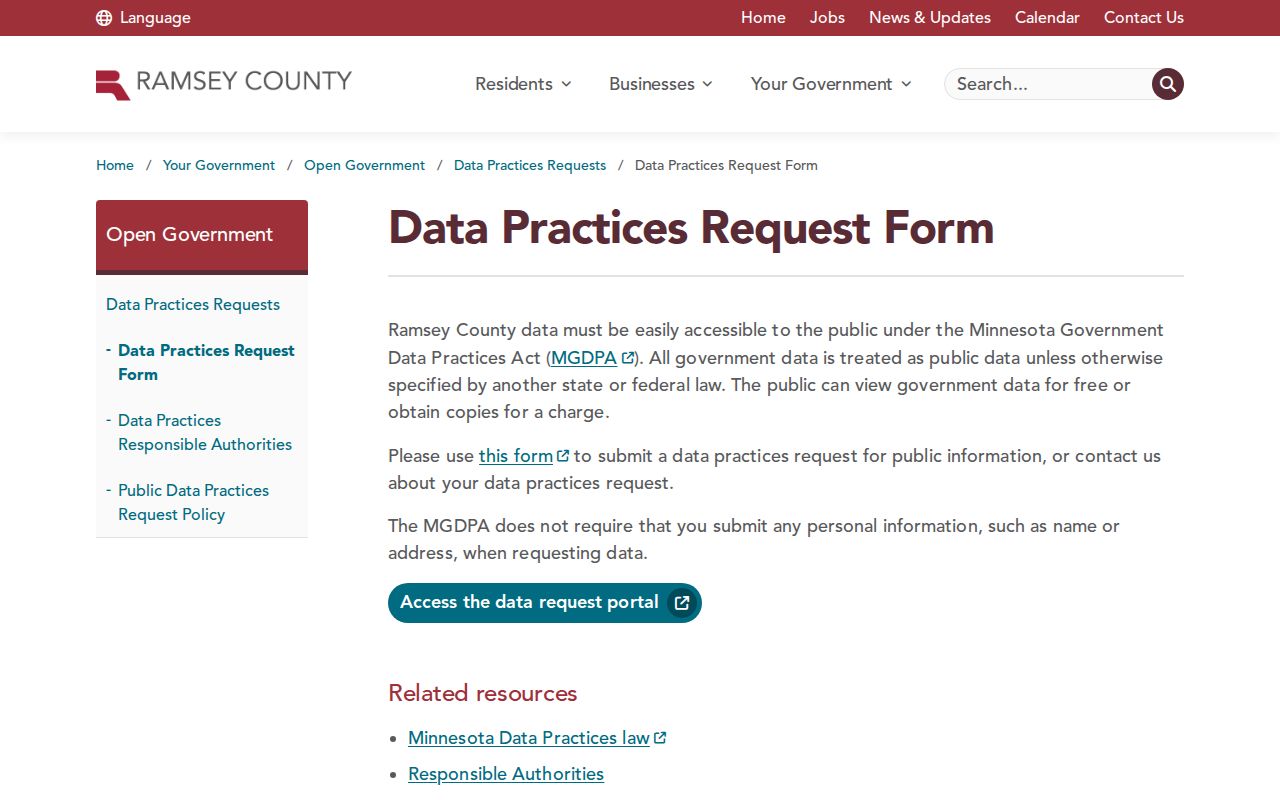
Use the form for a defined government record, not a request to create a complete resident directory.
St. Paul Vital Record Paths
Vital records answer event questions, not general address questions. Minnesota Department of Health maintains statewide birth and death records, while Ramsey County issues many local products and holds marriage-certificate functions. The Minnesota Official Marriage System is a public index that helps identify a county; it is not the certificate archive. Minnesota Historical Society indexes help with earlier events and noncertified historical research.
Access depends on the event and product. All Minnesota death records are public for noncertified copies, while certified products require an eligible requester. Birth data has stricter rules, including confidential categories and a 100-year public rule under Minnesota Statutes section 144.225. A certified court or vital product should be requested from the custodian rather than inferred from a search index.
Read Minnesota Vital Records product and eligibility information before ordering a record.
St. Paul Historical Directory Shelves
Saint Paul Public Library holds the core city-directory run: the digitized collection covers 1856 through 1922, microfiche covers 1856 through 1859, microfilm covers 1863 through 1935, and print volumes begin in 1938. The annual books can connect a name to an occupation, street, business, or household convention for a particular year. The entries are historical and incomplete, especially in early volumes that focused on household heads.
The library's local collections extend to yearbooks, maps, obituary and newspaper indexes, historic-building resources, and a 1976 street directory with former-street-name notes. MNHS and the Ramsey County Historical Society add newspapers, naturalization material, maps, permits, photographs, and archival research help. The St. Paul directory book explains the volumes, reading conventions, and year-by-year household method.
Saint Paul Public Library's city-directory collection identifies the online and in-library formats.
St. Paul Directory Milestones
St. Paul's historical directories change their value by year. The 1879 volume added a street index with “to” and “from” information. House numbers became more specific in 1885. A dotted-circle homeowner mark and spouse convention appear in 1929, while the 1933 books list all adults in a household. A 1940 bell symbol indicates a telephone, and later street sections added telephone numbers. Read the front matter for the exact year before assigning meaning to a mark.
Those changes shape the best starting point for an address question. Before 1885, a street, ward, neighborhood, or business may lead farther than a modern house number. After 1933, a directory observation can reflect more adults, though it still is not a census. Pair consecutive directory years with deeds, obituaries, permits, and census years rather than filling gaps by assumption.
The MNHS Digital Newspaper Hub provides a searchable St. Paul Pioneer Press collection from 1861 through 1961 that can help test a directory change.
St. Paul Records With Limits
Some apparent gaps are protections, not errors. Juvenile, sealed, expunged, and confidential court information is not a normal public lookup. Driver data is governed by federal privacy law. Utility and delivery customer information is not an ordinary public resident source. Safe at Home addresses use a substitute mailing address under Minnesota law. Protected voter information also has separate rules.
Use public records for a lawful personal purpose, family research, estate question, civic transparency question, or property history. Do not use information to stalk, harass, threaten, or harm anyone. An official custodian can explain whether a particular record is public, whether it has a redaction route, and how to correct an indexing problem.
Eligibility and contact information for Minnesota Safe at Home explain why a protected address may not appear in ordinary records.
Note: A protected or sealed record should be left to its custodian and the statutory access process.
St. Paul Time-Sensitive Public Lists
Custody and criminal-history tools serve a narrow purpose. Ramsey County's jail dashboard is a current-custody resource with first and last name, age, booking number, charges, and case information. It updates every 30 minutes and keeps a post-release window of only five days. The Minnesota Department of Corrections uses separate searches for people under its jurisdiction and for specified public registrant information. Neither source is a lasting location record or a conviction record.
The Minnesota BCA public criminal-history search requires complete first name, last name, and date of birth, and statutory sealing can make a current nonmatch meaningful. Compare an arresting charge with later MCRO case information. A booking number, case number, date, and county are stronger identifiers than a common name alone.
The Minnesota DOC search landing page directs users to its separate public search tools.
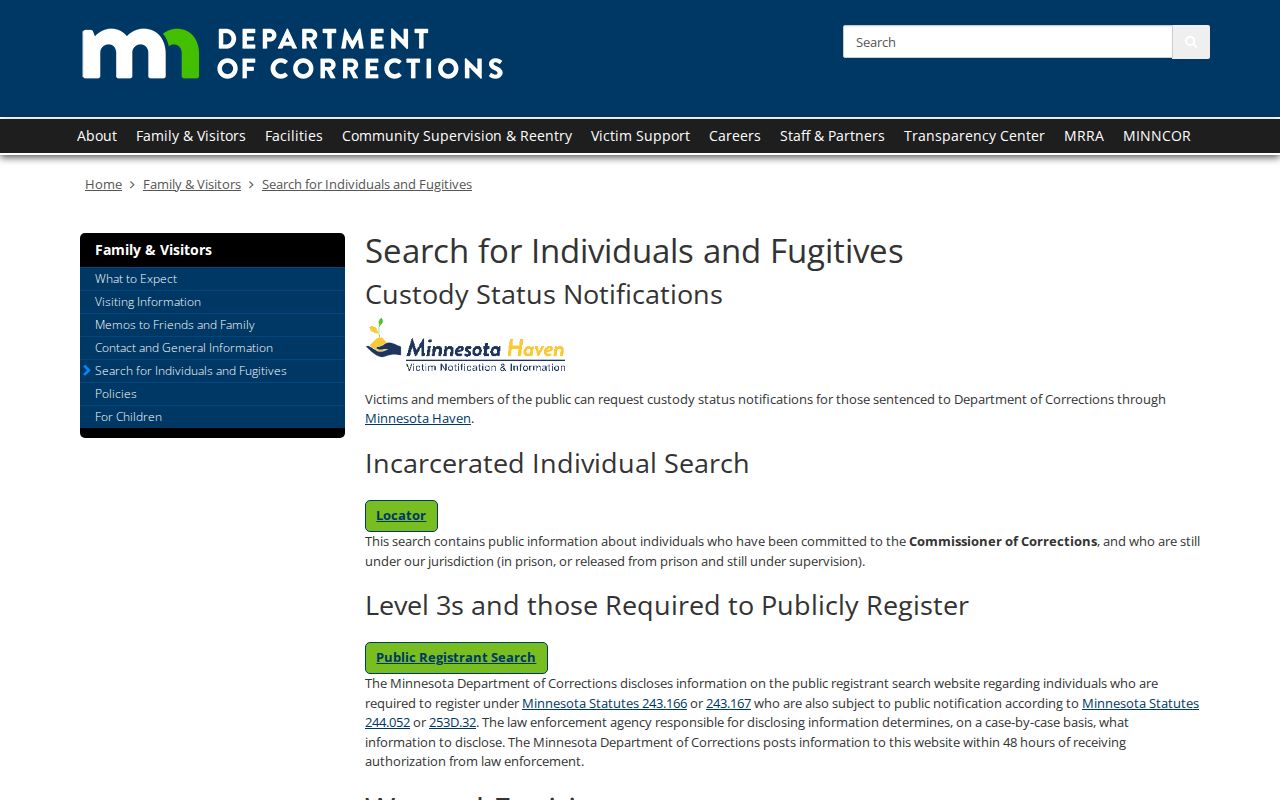
Choose the custody system that matches the question rather than treating a result as a general resident listing.
The Ramsey County jail dashboard displays current-custody filters and cautions.
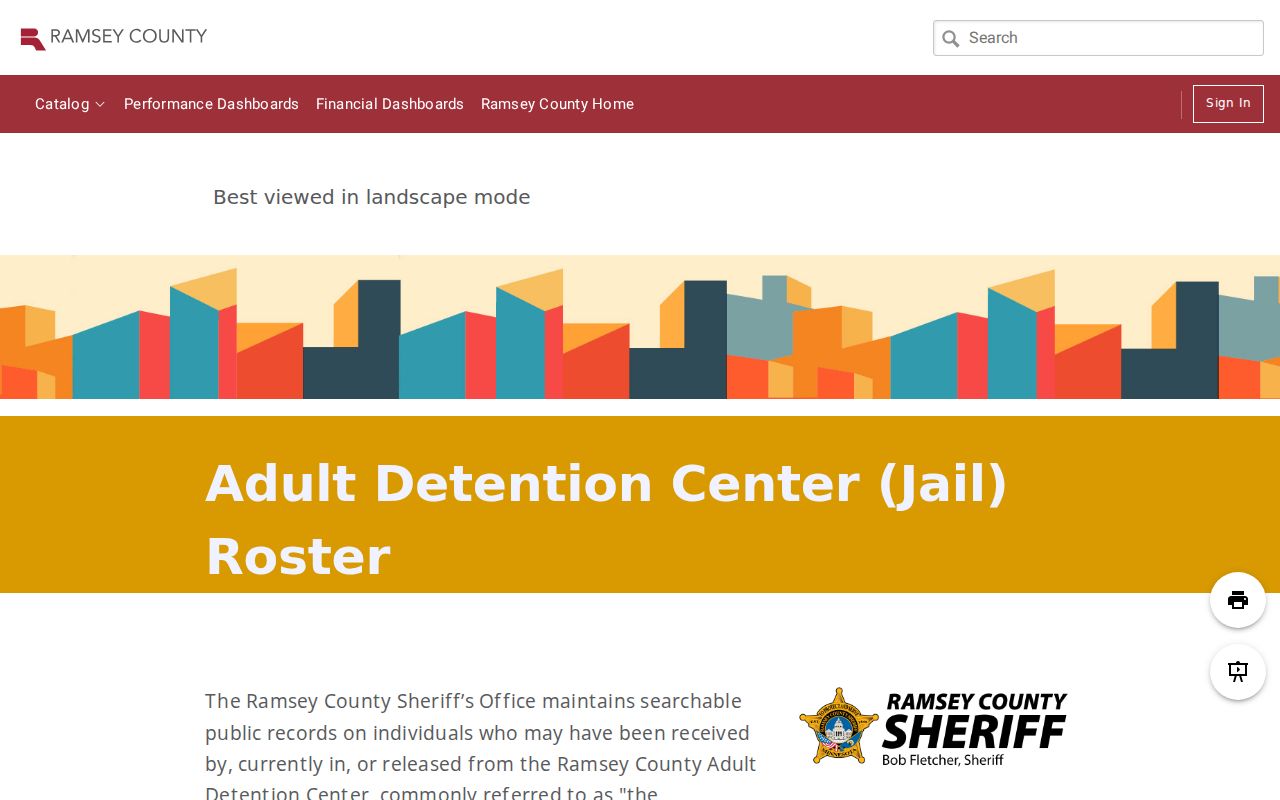
Read charge and case context separately, because a booking display is not a final court disposition.
St. Paul Address History Matters
Saint Paul records carry layers of geography. The City Surveyor documents fourteen boundary changes between 1849 and 1887, while historical files may name a township, ward, addition, or earlier jurisdiction. Main Street was Fort Street before it became Main Avenue in 1906 and later Main Street. In 2024, segments of Concordia Avenue and St. Anthony Street were restored to Rondo Avenue. Search both former and current street names when a historical address does not surface.
A postal ZIP, a taxpayer mailing address, a situs address, and a legal description can also disagree without any record being wrong. Preserve the original label before translating it to a modern map. The City Surveyor, Ramsey parcel tools, plats, and historic maps provide the bridge when a modern address is not enough. When a search crosses the river, a former addition, or an old ward line, retain the recorded spelling, township, and county heading. Those details make a later records request clearer and reduce the risk of joining two similarly named places.